


AI: beyond the hype
Artificial intelligence has moved past the experimental phase. After months of talk about upcoming transformation, it’s now embedded in operations and business processes. But between the initial buzz and real implementation, many organizations still struggle to turn potential into tangible value.
A recent study by the Wharton School and GBK Collective paints an interesting picture: generative AI is no longer a novelty for executives, it’s becoming a performance lever. Tools like ChatGPT, Copilot, and Midjourney are being woven into daily workflows. But a key question remains: how can we ensure these tools actually improve business performance?
From experimenting to creating real value
That’s where the mindset is shifting. Businesses no longer want to “do AI” just to keep up with trends. They want to measure its impact. The FOMO (fear of missing out) is giving way to a more rational approach: getting a real return on investment, in both the short and long term.
But the transformation doesn’t depend solely on the tech. It relies on three key pillars: processes, data, and people.
AI without visibility is like flying blind
AI needs reliable data to learn, suggest, and make decisions. But in most organizations, that data is stuck in silos or fragmented systems.
That’s where Process Mining comes in.
By analyzing digital footprints left in enterprise systems (ERP, CRM, ITSM, etc.), Process Mining maps how processes actually run, not how we assume they do. This visibility allows:
- AI to understand the business context before taking action
- leaders to pinpoint real improvement opportunities
- teams to act on facts, not gut feelings
AI without Process Mining, or vice versa, limits the full potential of transformation. But when combined, they turn data into measurable action.
How AI and Process Mining work together
The most forward-thinking organizations aren’t just looking to automate. They’re aiming for continuous improvement.
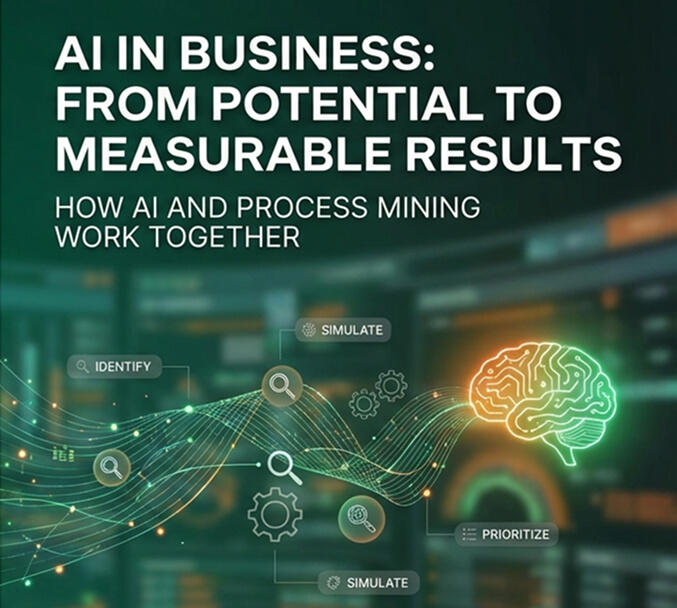
With Process Mining, AI can:
- identify bottlenecks in operations
- simulate the impact of improvements before implementing them
- prioritize actions based on real business impact
This is what we see in the field, especially in the mandates we support: the real gains come from combining visibility, analysis, and action in a smart way.
Bottom line: see before you act
AI isn’t a magic bullet. It’s a lever. And like any lever, it only works if it’s grounded on something solid.
Process mining provides that foundation. Together, they help organizations act with clarity, and turn AI into a tool for continuous improvement, not an isolated experiment.
Can your AI truly improve what it can’t see?
That’s the question every business should ask before moving forward.